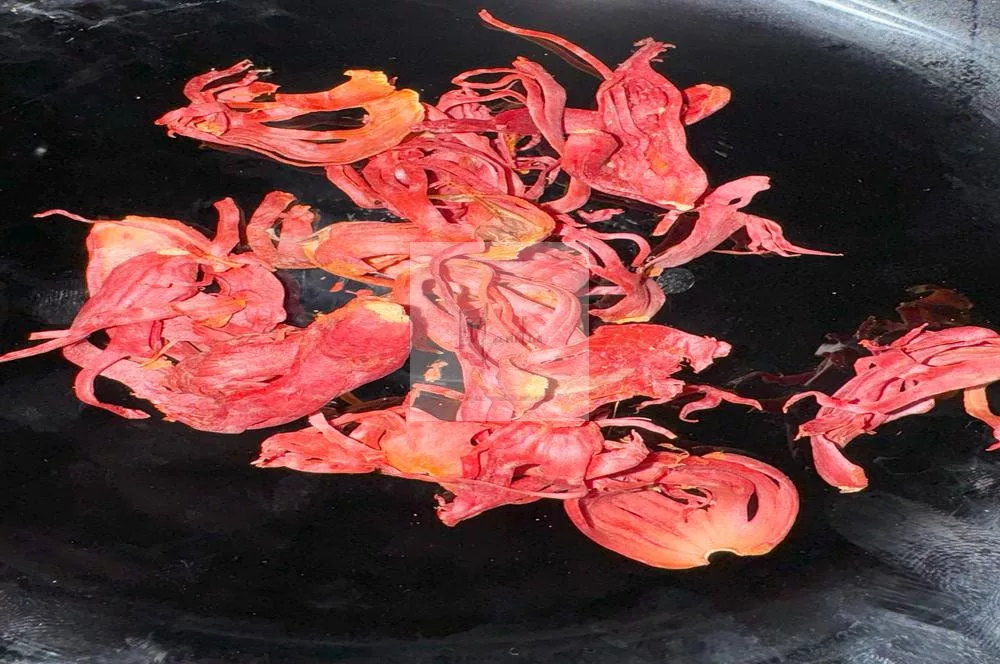
Nutmeg flowers
5,77 €
Nutmeg flowers


5,77 €
Unit price: 0,29 €/gramm
Allergén információk:
Nyomokban mustármagot és szezámmagot tartalmazhat.
Bio/Fairtrade :
Közvetlenül a termelőtől, illetve kistermelői szövetkezettől.
Gyors kiszállítás :
Raktáron lévő terméknél 1–3 munkanap
Vegetáriánus / vegán :
A termék vegán!
Várható szállítás :
24.09.2026
The Nutmeg Flower: The Spicy Miracle
The nutmeg flower, also known as the mace flower, is not only beautiful, but also dazzles with its unique flavour. It's not actually a flower, but the seedpods of the nutmeg tree, which take on their distinctive red-orange colour when dried. This spice has a sweet, aromatic fragrance and a slightly pungent flavour, and is an excellent seasoning for many dishes.
Origin and history:
The nutmeg tree originated in Southeast Asia, but is now cultivated in tropical climates around the world. It was known and used for medicinal and culinary purposes by the ancient Greeks and Romans. In the Middle Ages it was considered a highly valuable herb and was measured in gold weight.
We also recommend the following product as an accessory
Bundle offers
Details
The nutmeg flower, also known as the mace flower, is not only beautiful, but also has a unique flavour. It's not actually a flower, but the seedpods of the nutmeg tree, which take on their distinctive red-orange colour when dried. This spice has a sweet, aromatic fragrance and a slightly pungent flavour, and is an excellent seasoning for many dishes.
Origin and history:
The nutmeg tree originated in Southeast Asia, but is now cultivated in tropical climates around the world. It was known and used for medicinal and culinary purposes by the ancient Greeks and Romans. In the Middle Ages it was considered a highly valuable herb and was measured in gold weight.
Uses:
The nutmeg flower can be used ground or whole. It is mainly used to flavour sweet dishes, but can also be added to meat dishes, vegetables and sauces. It is also good in cakes, desserts, hot chocolate, punch, liqueurs and can be a great addition to the flavour of some savoury dishes.
Health benefits:
Nutmeg flowers are not only delicious, but also have a number of health benefits. It has digestive, antispasmodic, anti-inflammatory and immune-boosting properties. In addition, its antioxidant content can help protect cells from harmful free radicals.
Moderate consumption of nutmeg flowers is recommended, excessive intake may cause nausea and vomiting.
Data
Kiszerelések:
20 g/csomag
A termék tartalmaz-e cukrot?:
NEM
Futárszolgálat :
Csomagpontra 1 390 Ft-tól, 20 000 Ft felett ingyenes
Származási hely:
Srí-Lanka
Brand:
Manília
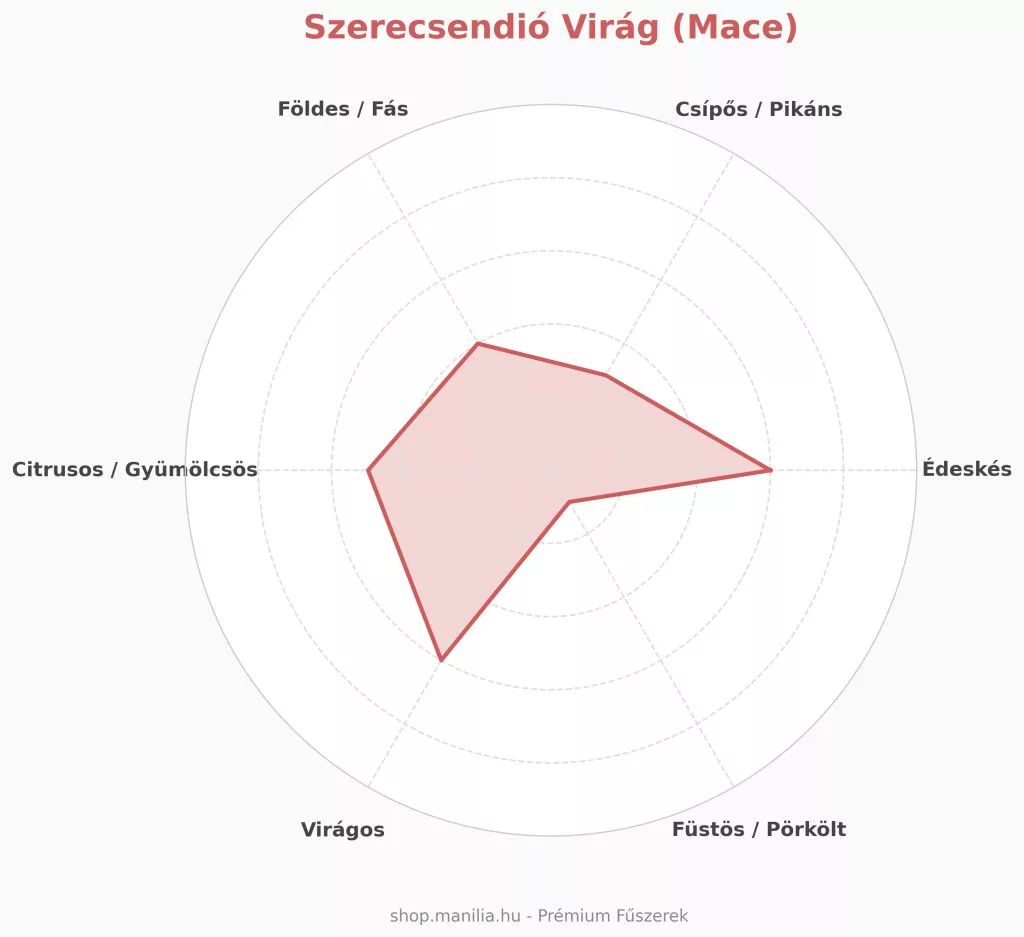
Ízprofilok:
A szerecsendiónál lágyabb, édesebb, kevésbé intenzív aroma jellemzi, virágos-citrusos jegyekkel gazdagítva, elegáns, selymes összhatással.
Brand:
Manília
Tökéletes párosítások
Leves:
Karfiolkrémleves vagy halleves – a mace finomabb, virágosabb aromája kifinomult mélységet ad a krémleveseknek.
Főétel:
Rakott burgonya vagy bárányragu – a szerecsendióhoz hasonlóan kiválóan illik krémes, sós fogásokhoz.
Desszert:
Vaníliás puding vagy gyümölcskompót – a mace lágy, édeskés jegyei harmonizálnak a tejes desszertekkel.
Koktél:
Forralt bor vagy fűszeres tea-alapú koktél – a mace citrusos-virágos aromája elegáns csavart ad a meleg italoknak.
Karfiolkrémleves vagy halleves – a mace finomabb, virágosabb aromája kifinomult mélységet ad a krémleveseknek.
Főétel:
Rakott burgonya vagy bárányragu – a szerecsendióhoz hasonlóan kiválóan illik krémes, sós fogásokhoz.
Desszert:
Vaníliás puding vagy gyümölcskompót – a mace lágy, édeskés jegyei harmonizálnak a tejes desszertekkel.
Koktél:
Forralt bor vagy fűszeres tea-alapú koktél – a mace citrusos-virágos aromája elegáns csavart ad a meleg italoknak.
A szerecsendió virág ízének kiemelése, jellemzők
A szerecsendió virág, vagy más néven mace, a szerecsendió termésének külső, hálószerű burka. Bár sokszor a szerecsendió árnyékában marad, ez a fűszer is rendkívül értékes, és egyedi íz- és aromavilággal rendelkezik.
A srí-lankai szerecsendió virágnak különleges, édeskés, mégis fűszeres aromája van, amit érdemes a lehető legjobban kihasználni a konyhában. Íme néhány módszer, amivel kiemelheted az ízeit:
1. Frissen őröld:
A legjobb, ha egész szerecsendió virágot vásárolsz, és közvetlenül felhasználás előtt őröld meg. Így az aromája a legerőteljesebb lesz.
Használhatsz mozsártörőt vagy fűszerőrlőt.
2. Pirítsd meg:
Egy száraz serpenyőben pirítsd meg a szerecsendió virágot alacsony lángon, amíg illatozni nem kezd.
Vigyázz, nehogy megégjen, mert keserű lesz!
A pirítás segít felszabadítani az illóolajokat, így az íze intenzívebb lesz.
3. Párosítsd a megfelelő ételekkel:
A szerecsendió virág különösen jól illik a tejes ételekhez, például besamel mártáshoz, krémlevesekhez, rizspudinghoz.
Kiválóan ízesíthetsz vele halételeket, tojásételeket, de akár a vasárnapi húslevest is megbolondíthatod vele.
Édeskés íze miatt süteményekbe, kekszekbe, forralt borba is teheted.
Próbáld ki gyümölcssalátákhoz vagy lekvárokhoz is!
4. Használd mértékkel:
A szerecsendió virágnak intenzív íze van, ezért érdemes óvatosan adagolni.
Kezdd egy csipetnyi mennyiséggel, és kóstolás után adj hozzá még, ha szükséges.
5. Készíts belőle teát:
Forrázz le egy teaskálanyi szerecsendió virágot 2 dl vízzel, és hagyd állni 10 percig.
Mézzel ízesítve fogyaszd.
A srí-lankai szerecsendió virágnak különleges, édeskés, mégis fűszeres aromája van, amit érdemes a lehető legjobban kihasználni a konyhában. Íme néhány módszer, amivel kiemelheted az ízeit:
1. Frissen őröld:
A legjobb, ha egész szerecsendió virágot vásárolsz, és közvetlenül felhasználás előtt őröld meg. Így az aromája a legerőteljesebb lesz.
Használhatsz mozsártörőt vagy fűszerőrlőt.
2. Pirítsd meg:
Egy száraz serpenyőben pirítsd meg a szerecsendió virágot alacsony lángon, amíg illatozni nem kezd.
Vigyázz, nehogy megégjen, mert keserű lesz!
A pirítás segít felszabadítani az illóolajokat, így az íze intenzívebb lesz.
3. Párosítsd a megfelelő ételekkel:
A szerecsendió virág különösen jól illik a tejes ételekhez, például besamel mártáshoz, krémlevesekhez, rizspudinghoz.
Kiválóan ízesíthetsz vele halételeket, tojásételeket, de akár a vasárnapi húslevest is megbolondíthatod vele.
Édeskés íze miatt süteményekbe, kekszekbe, forralt borba is teheted.
Próbáld ki gyümölcssalátákhoz vagy lekvárokhoz is!
4. Használd mértékkel:
A szerecsendió virágnak intenzív íze van, ezért érdemes óvatosan adagolni.
Kezdd egy csipetnyi mennyiséggel, és kóstolás után adj hozzá még, ha szükséges.
5. Készíts belőle teát:
Forrázz le egy teaskálanyi szerecsendió virágot 2 dl vízzel, és hagyd állni 10 percig.
Mézzel ízesítve fogyaszd.